
Choosing Cabinet Colors Around the Kitchen You Have
Use counters, flooring, backsplash and door details to compare a quiet cabinet palette with a stronger contrast.
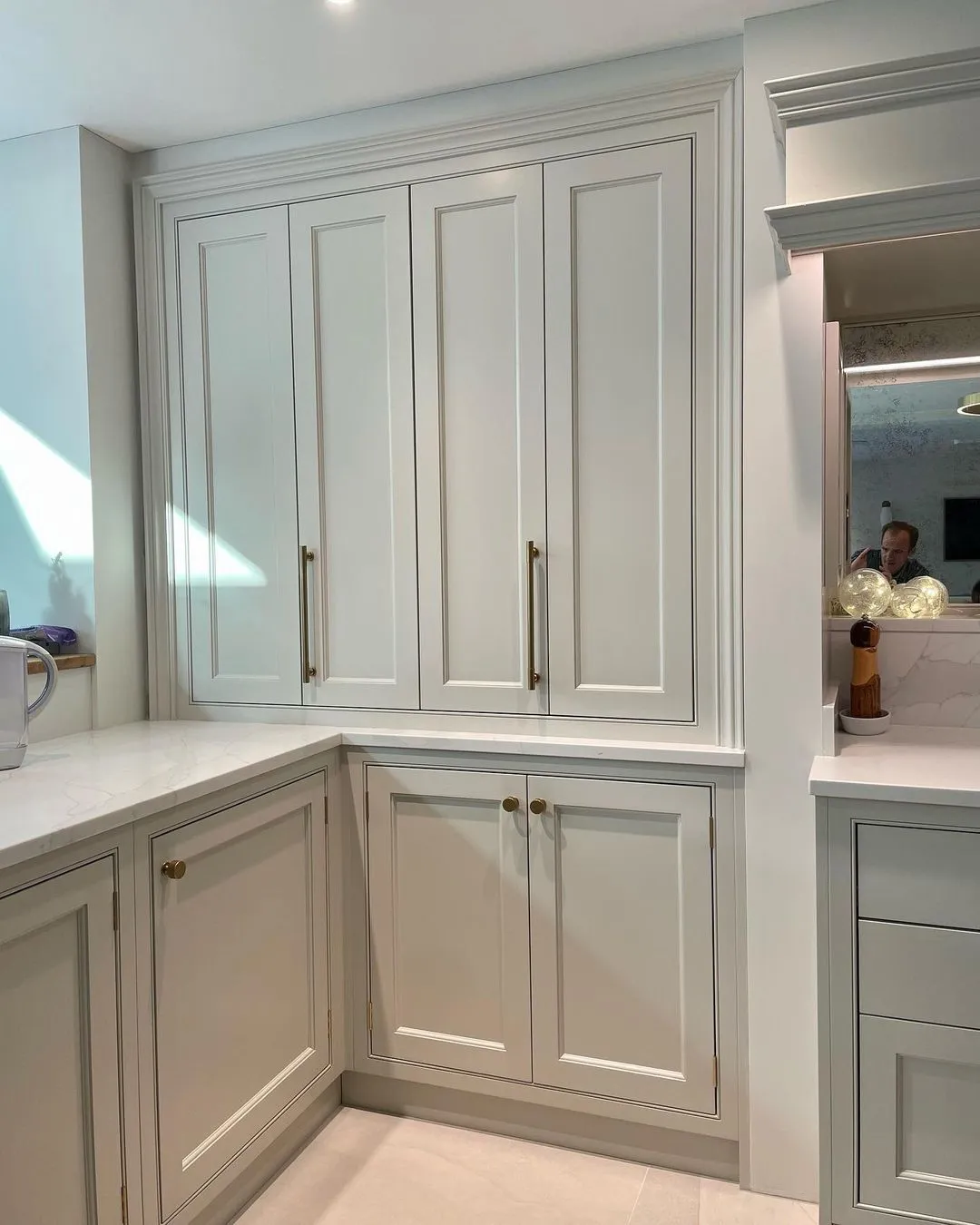
“Modern” and “classic” are useful starting words, but they do not specify a cabinet color. One homeowner may use modern to mean a quiet, continuous kitchen; another may mean strong contrast. Describe the surfaces and relationships you like before trying to fit the whole room into a style label.
Start with what will remain: the countertop, backsplash, floor, appliances and door profile. The cabinet finish will sit among those materials every day. A color selected from a different kitchen photograph needs to be tested in your own space.
Decide where you want attention
Look at a room-wide view. If the backsplash has a strong pattern, ask whether you want the cabinetry to sit quietly beside it or create another contrast. If the kitchen is visually simple, consider whether the island or a group of cabinets should become more noticeable.
Write the goal in plain language: lighter fronts against the existing dark tile, a quieter relationship with the wood floor, or an island that differs from the perimeter cabinets. That gives the sample comparison a purpose.
Work with the door details
A painted finish leaves the basic shape of the cabinet door in place. View the sample near the rails, panels and edges, especially where the room's light falls across them. Consider the hardware at the same time.
Changing the color does not replace a door profile or remove every existing texture. If the desired appearance depends on flatter doors, different proportions or relocated handles, separate those requests from the color decision and discuss what work they involve.
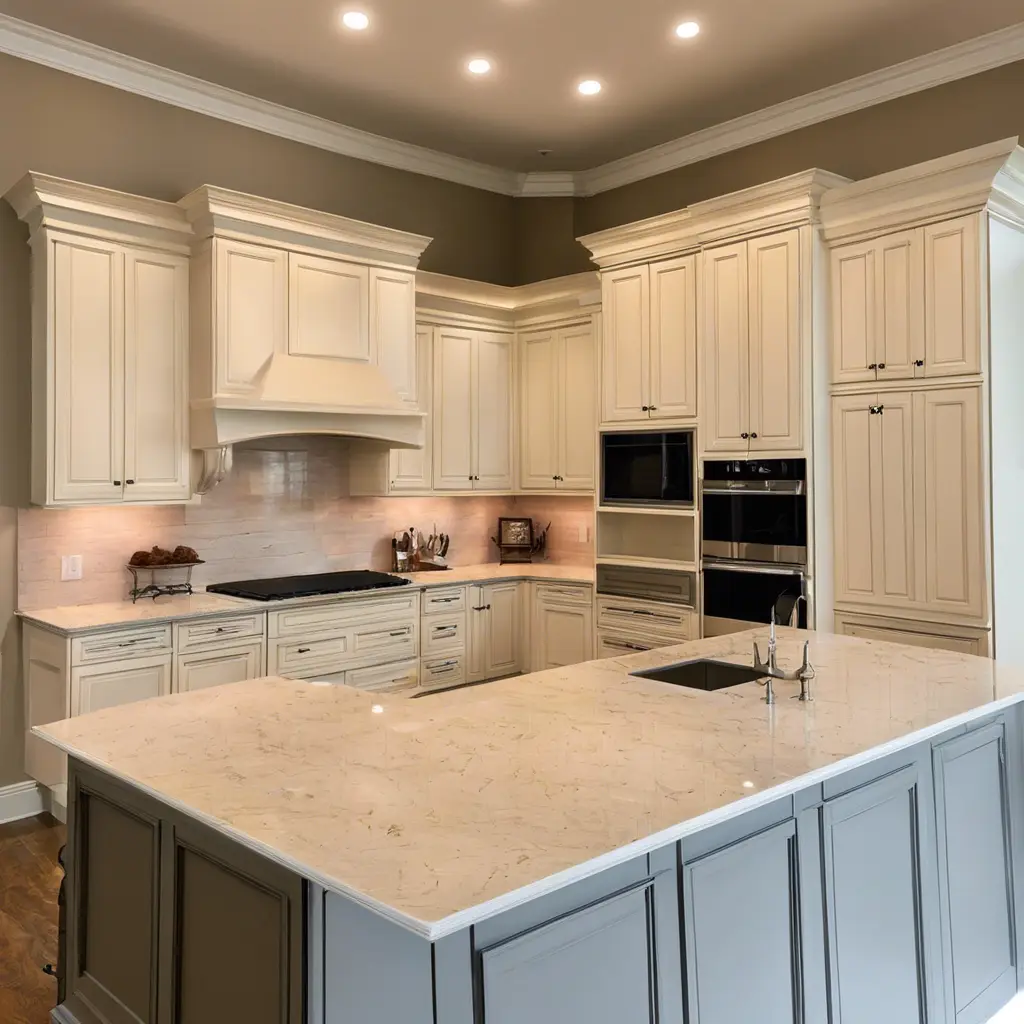
Compare one color with a two-tone scheme
A single cabinet color can connect the island and perimeter visually. A two-tone scheme introduces another relationship to manage. Neither choice is automatically more appropriate for an older or newer home.
If you are considering two colors, identify the exact cabinets assigned to each. View both samples together beside the countertop and floor. Check the side of the island, nearby tall cabinets and the view from the adjoining room so the change has a clear stopping point.
Include sheen in the decision
Color and surface reflection are separate aspects of the finish. Ask to see a sample that represents the proposed cabinet coating and sheen. A small wall-paint chip can help narrow a color family, but it does not show every aspect of the completed cabinet finish.
Keep the countertop and appliance reflections in the comparison. Explain whether you prefer a quieter appearance or more noticeable highlights, then ask which finish options are suitable for the actual cabinetry and agreed coating system.
Approve the room relationship
View physical samples in daylight and under the lights you normally use after dark. Take notes on the color identification and sample finish; photographs are useful records, but the screen is not the final approval surface.
Bring your short list and room-wide photographs to Henry's cabinet-painting service. Choose the palette alongside the preparation and surface list so the final estimate describes both the appearance and the work needed to achieve it.
Explore more of our work