
Considering Limewash on Brick? Start With the Surface
Brick condition, existing coatings and the amount of brick you want to show all belong in a limewash conversation. Start with compatibility and a sample before choosing a finish.
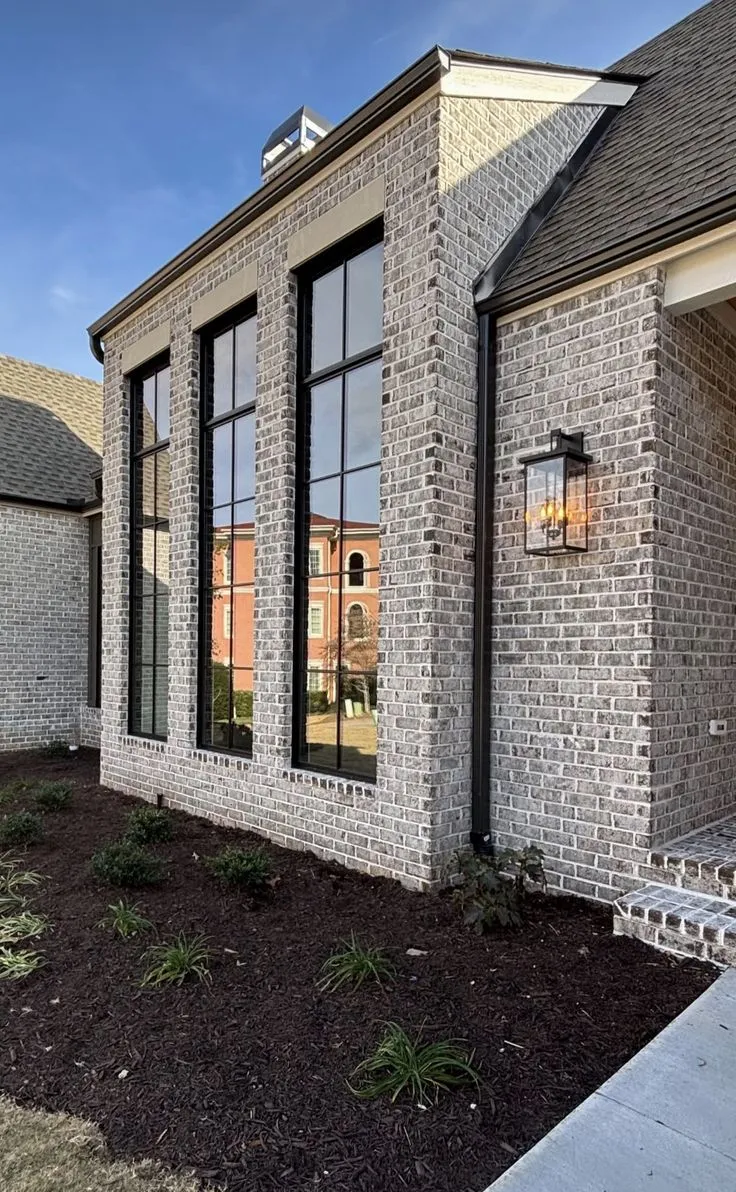
A photograph of lightened brick can suggest several different treatments. It may show limewash, masonry paint, another finish, or simply a different brick. Before choosing a product from a reference image, describe the result you want: more of the original brick showing, a more uniform wall, or a lighter backdrop for the entrance.
That description is the beginning of a masonry finish discussion. The existing surface determines which approaches are suitable. A finish that works on one house should not automatically become the specification for another.
Identify what is already on the brick
Gather any information about previous painting, sealing or repairs. Include older photographs, product labels and invoices if you have them. An apparently bare wall may have a treatment that is difficult to identify from a distance, so a full-wall photograph is useful context rather than proof of compatibility.
For a specific product example, Romabio describes Classico Limewash for unsealed, unpainted, absorbent masonry. That limitation is a reason to identify the surface before choosing a system. It is not a recommendation to apply that product to every brick exterior, and it does not establish which system belongs on your home.
Separate masonry concerns from the appearance change
Point out cracked or missing mortar, damaged bricks, staining, and places that repeatedly look damp. Record where each issue appears, especially around openings and transitions. Ask which conditions need evaluation or repair before a decorative finish can be considered.
An estimate should distinguish the proposed finish from any masonry repair or investigation. Changing the wall color does not answer questions about the condition behind a recurring stain. If another specialist is needed, agree how that work connects to the painting schedule before materials are selected.
Use a sample to discuss the amount of variation
A small color chip cannot show how a finish relates to the full range of bricks and mortar on a wall. Ask how a representative sample will be prepared and where it can be viewed with the existing roof, windows and trim.
Describe the sample in concrete terms. Note which bricks remain prominent, how much the mortar contrasts, and whether the variation feels intentional from the sidewalk as well as nearby. Keep a record of the agreed appearance. A reference photograph can support that conversation, but its lighting and unknown finish should not replace a sample on an appropriate surface.
Mark the exact masonry included
Identify the front elevation, side returns, chimney, porch walls or separate garden walls that you want discussed. Also list the surfaces that remain unchanged, such as paving, stone details, windows and roof materials. Access above porches and landscaping beside the wall can affect the proposed work.
Bring the finish questions into the same conversation as the surrounding painted trim. The brick and trim can be coordinated visually while still requiring separate material and preparation decisions.
For an Eastern Iowa exterior project, contact Henry’s through the exterior-painting page with wide photographs and a description of the change you want. Confirm the suitability and availability of any masonry finish as part of the actual estimate.
Explore more of our work