
Deck Staining Preparation: What to Resolve Before Work Begins
A deck-staining plan starts with the boards and existing finish, then addresses repairs, cleaning, access and the weather window. Keep staining separate from painting and construction.
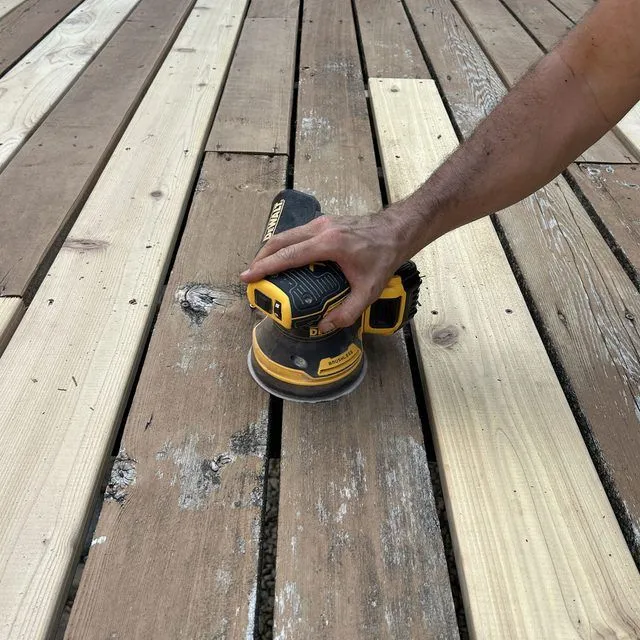
Deck staining starts with understanding the deck you already have. Its boards, railings, steps and previous finish may need different attention. A useful preparation conversation identifies those differences before a color is chosen or a work date is treated as fixed.
Staining, painting and construction are separate scopes. A painted-looking finish in a photograph does not reliably identify the product, and a new deck photograph does not establish a staining method. Use your own deck’s records and condition to organize the work.
Identify the materials and previous finish
Share the material information you have for the decking, rails and trim. Wood boards and composite products should not be assumed to accept the same treatment. If there is a previous finish, look for its product name, color and application date in your records rather than guessing from how much grain remains visible.
Describe the result you want, including whether you want to see the wood’s variation. Ask what the existing coating allows, what preparation each proposed option needs, and whether a sample can help confirm the appearance. A more opaque-looking option is not automatically the same as paint.
Agree on repairs before the finish work
Point out loose or damaged boards, questionable rails, uneven steps and areas that stay wet. Ask which concerns need assessment before anyone treats the deck as ready for staining. A stain estimate should identify the specific repairs included and work that must be handled separately.
If your main concern is the structure, begin with deck construction and repair planning. A finish changes the surface appearance; it should not be used to stand in for a decision about a damaged component.
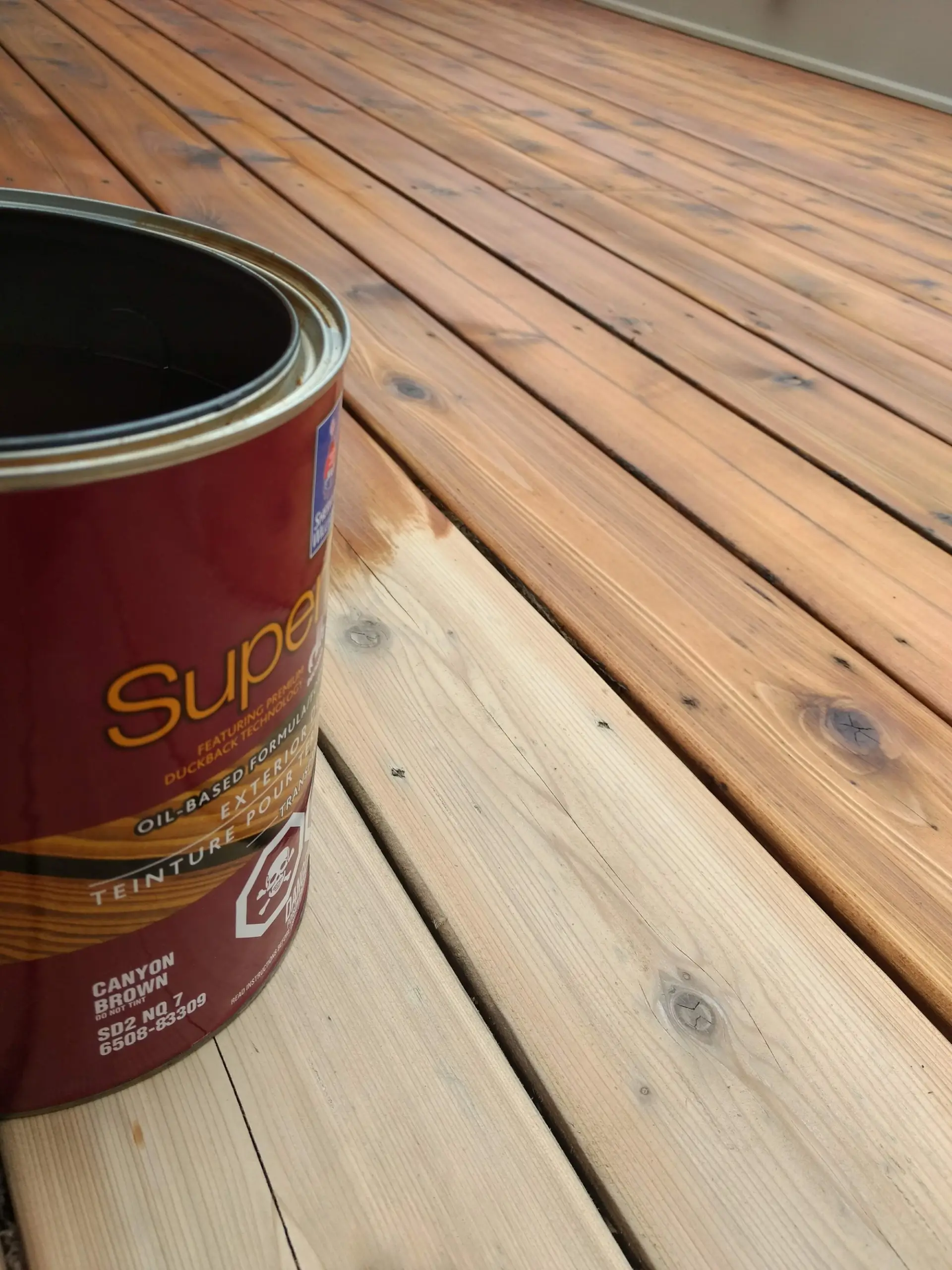
Make preparation specific to the existing coating
Ask how the contractor will assess the old finish and choose a compatible cleaning or removal approach. Sherwin-Williams’ deck-preparation guidance identifies a clean, dry surface as a basic starting point for staining. The actual cleaner, removal method and readiness checks should follow the selected system and the condition of your deck.
Avoid using a universal waiting period or pressure-washer setting from a general article as the job specification. Discuss how nearby siding, metal details, planting and occupied areas will be protected during the proposed preparation.
Count more than the deck floor
List the walking surface, stair treads, risers, handrails, balusters, posts, fascia and any overhead structure separately. Specify which faces are included. A deck floor can be straightforward to describe while a detailed railing has many smaller surfaces that need their own allowance.
Also identify furniture, planters and other items that must move. Agree who clears them and where they can stay without blocking access or damaging another finished surface.
Plan the return to use
Ask how weather, surface condition and the product instructions will affect the sequence. Confirm when people may walk on the deck and when furniture or rugs may return. Those are project-specific instructions, not a promise tied to a generic number of hours.
Request a deck-staining discussion with Henry’s using a wide view, a close view of the existing finish and your list of included surfaces. That gives the estimate a clear starting point and keeps staining decisions separate from construction or deck painting.
Explore more of our work